Saturday, December 29, 2012

FAMILY OF DESTINATION


The Bible is a family history. Genesis is the story of Adam and his family.  The Old Testament is the story of Abraham's family; the New Testament, of Jesus' family.  Jesus spent the night before he died with his brothers, at the supper table.  He was not working late at the office.

Jesus came as a "brother" to Israel - in the Aramaic of the day, he was part of their family, a relation.  The word "brother" was used for all male kin, not just the sons of your mother or father.  Jesus is the hope of his family.  He is the answer to our family of origin problems. 


In the Book of Matthew we begin with Jesus' Hebrew genealogy.  In the book of Luke the genealogy of Jesus is extended back to Adam.  Jesus is kin to each of us, our "brother," and his love and justice extend to all mankind.  We are his family.  We are not mere numbers, we are not "strangers" to him.  He expresses his care for us as his deeply loved brothers, mothers and sisters. 

Our hearts are comforted by knowing that He loves us with the unconditional love, mingled with absolute honesty, that is the very best that good families offer.  It is no accident that a society who denies Jesus, who denies God, becomes uprooted, bleak, despairing, and suicidal.  We have lost our family.  We have lost the bedrock of love and acceptance that we were meant to have.


Jesus was accused of spending too much time at weddings and feasts, eating and drinking.  He spent a lot of time with family and friends, being happy together.  Jesus had this to say about his family:
“Who is my mother? Who are my brothers?” And stretching out his hand toward his disciples, he said, “Here are my mother and my brothers. For whoever does the will of my heavenly Father is my brother, and sister, and mother.”
He did not exclude or deny his biological family by this statement.  Rather, He included in his family "whoever does the will of my heavenly Father."  We see this most especially at the cross, when he joined John and Mary together as son and mother.

Remember that when Jesus speaks, it is not just an assertion of fact.  Jesus' words are acts of power.  By His word all was created.  When he says we are his family if we do the will of God, it is not just "as if," or figurative, language.  We are by His word made His family.


Christmas is the day we begin again our worship of Jesus, who came to us as a new-born baby, to show us a new life.  We are all welcome to participate in his new and perfect life, because He loves us.  We are His sisters and brothers.

We all have our "family of origin" issues, as the psychologists tell us.  Jesus is the healing of our family of origin issues.  He is our "family of destination."  And our destination is a wedding banquet.

 Banquet of the Lamb

Merry Christmas, and a Happy New Year! 

Saturday, December 22, 2012

PERHAPS

Explain to me again, in simple words,
How we find ourselves, this Advent season,
weeping (once again) for children murdered 
by a young man run amok at a school?

The words and images come ceaselessly
With ads for jello, gum, Depends and cars.
The slaughter of innocents moves product.
We sure do talk a lot, to no effect.

How long until we see the substance, not
The accidents of motive, time and place,
Of opportunity, intent and act?
Maybe we could confess our ignorance?

So quick to question God, so slow to ask
Ourselves (in whom we trust, to whom we pray) - 
What have we wrought?  Why are we so broken?
Maybe we could murmur a contrite prayer?

Ah me, this glist'ning shunt, greased with the fat
dripping from the human sacrifices
We offer every day, every hour - 
Our children for our self-absorbed desires.

On we slide, a bloated, gassy torso,
Pus leaking from a dozen rotting wounds.
On we slide, a circus freak in lipstick,
Wedged in a coffin filled with our own waste.

We gorge on lust, pride, greed, and irony
And expect our children to find meaning.
We adulterate, abort and divorce
And wonder at their madness and despair.
"Ye wander, witless, in your wilderness
Refusing drink from the water of life.
Ye deaf, blind, dumb, ye lame, ye sore smitten -
Drink yet from the river of life and live."
Perhaps it is true we need a savior?
Perhaps we cannot find our way alone?
Perhaps in these tears we could kneel and pray
To the poor baby born on Christmas Day? 


Saturday, December 1, 2012

ETERNALLY OPTIMISTIC

This is an optimistic time of year.  Today marks the end of "Ordinary" time, in the Catholic liturgy, and tomorrow marks the beginning of Advent, the four weeks during which we prepare for the Christmas holiday.  Or "Christ Mass" "holy day." 


Next time someone gets snarky about the Catholic Church, remember that it gave us Christmas and the concept of a "holiday." You might remind them, as well, that it is to the the Catholic Church that we owe Sundays off from work, the New Testament, the concept of universal education and health care for the poor, and the inalienable dignity and value of each human being, no matter how humble.  

None of these ideas had any currency in human society or government at the time of Christ.  It was Christ's Church in which they were nurtured and spread, in the face of extraordinary opposition.  

And to the Church we owe 2,000 years of fabulous art, music, literature, philosophy and theology.

I'm not bragging, I'm just pointing out facts for your consideration.

The liturgical readings of late have been consumed with last things, and have focused on the Book of Revelation.  


People usually think of Revelation with a certain amount of awe, since many of the visions described there are of enormously powerful alien creatures filled with malice toward the human race.  "Revelation," the movie, would far outstrip in intensity and pure terror any apocalyptic science fiction movie of recent years.

The Damned (from "The Last Judgment")
 
Hunter S. Thompson recognized the power of Revelation when he wrote
I have stolen more quotes and thoughts and purely elegant little starbursts of writing from the Book of Revelation than anything else in the English language.. . because l love the wild power of the language and the purity of the madness that governs it and makes it music.
Of course, as with almost anything Thompson wrote, you must separate the flares of insight from the smog of peyote fueled megalomania and self indulgence.  For Thompson, Revelation was a book of madness. 


Thompson's words have the benefit of paying the book its due, in his typically perverse way.  Counting on the book being madness is one of two options.  If the book is even one-tenth true - in any sense, physically, spiritually or allegorically - we are in for a catastrophically bad ride.  

So dismissing it all as "madness" is perfect.  Unless, of course, you are wrong.

 
Little known by those casually familiar with Revelation are the passages of light and hope cast liberally throughout the book.  One of the readings from today's liturgy is from the final chapter of the Book of Revelation, speaking of the end of all things:

An angel showed me the river of life-giving water,
sparkling like crystal, flowing from the throne of God
and of the Lamb down the middle of the street,
On either side of the river grew the tree of life
that produces fruit twelve times a year, once each month;
the leaves of the trees serve as medicine for the nations.
 

Nothing accursed will be found anymore.
The throne of God and of the Lamb will be in it,
and his servants will worship him.
They will look upon his face, and his name will be on their foreheads.
Night will be no more, nor will they need light from lamp or sun,
for the Lord God shall give them light,
and they shall reign forever and ever.  

Who are these servants?  Jesus identifies them in his first sermon: "blessed are the poor in spirit, for theirs is the Kingdom of Heaven."  

The Kingdom passes not to the powerful, not to the arrogant, not to the "wise" or smart or wealthy, nor to the cunning or the ruthless.  The Kingdom passes to the "poor in spirit," to the meek, the humble, those who mourn and those who "hunger and thirst for righteousness."  It passes to those spurned by this world, insulted for having believed in a King and his eternal, just and loving Kingdom.  

This hope is mocked and dismissed by the erudite as the "opium of the people."  Quite the contrary, this hope is "medicine for the nations," as the Book of Revelation says.  And my, my, the nations - including our own - certainly seem to be in need of some medicine right now.


So it is hard not to be optimistic as we embark again on the Church-wide retelling of the story of that Eternal King's love. 

Thursday, November 22, 2012

KNEE DEEP IN THE SURF


President Obama and his Progressive brethren (and sistren) operate under a straightforward and attractive foundational principle: people's assets and income should be roughly equal, or at least more equal than they are now.  Call this principal "financial equality."  This principle is the necessary foundation for the Progressive assertion that wealth should be "redistributed" by the government.

Financial inequality is different than poverty.  If 99% of our society were suddenly given $200,000 each by the government, but the other 1% were given $1 million each, income inequality would have increased, but not poverty. 

It is possible for an entire society to get much wealthier, but at the same time, for financial inequality to increase. Conversely, it is possible for a society to become much more equal financially, yet for everyone to get much poorer.  For instance, perfect destitution for everyone would also mean perfect financial equality.  I am sure Mr. Obama does not seek perfectly distributed destitution, so the goal is likely lots of wealth distributed evenly.

Once you accept the principle of financial equality, Mr. Obama's policy choices become much easier to understand.  Even though tax increases on wealthy Americans will do very little to balance the budget deficit, and are likely to slow economic growth, they tend to reduce financial inequality, and are therefore desirable.


Financial equality makes sense, as a policy, when you believe that if everyone had roughly the same income and assets, we would all be happier, healthier, and more neighborly, provided the income and assets were enough to live on.

This is where I have my doubts.  Let me share just a few brief examples.

Would financial equality eliminate war?  Unlikely.   Plenty of very wealthy nations have gone to war over the years.  Think of Germany (4 times between 1867-1945).  Think of every colonial power during the 19th century.  These countries were not trying to gain financial parity. They were wealthier than the countries whom they attacked.


Neither would financial equality eliminate drug addiction, as anyone who has dealt with addiction can tell you.

Perhaps there is a point, when everyone has financial equality, where we would see drug addiction disappear or greatly diminish, but this seems wildly unlikely.  There was a huge problem with alcoholism in the former Soviet Union, which made far more progress toward financial equality than we have.

Joe Stalin encouraging people not to drink so much vodka, circa 1935.

Would financial equality eliminate greed and envy?  Not in my experience.  People in most American suburbs are very evenly matched financially.  They still suffer from lots of envy and greed.  College professors, some of the smartest, most financially equal and Progressive people on earth, are notoriously prone to envy and greed, fighting savagely with each other over seemingly minor financial issues. 

Getting more money can ease certain types of pain, but it doesn't make people happy.  If my getting more money doesn't actually made me a happier person, how does making sure I have the same amount as everyone else make me happier?

I don't buy the first principles of Progressivism. I don't agree with the notion that financial inequality is problem #1 with humanity.  Not by a long shot.  That doesn't mean I think poverty is a good thing, or irrelevant.  Remember that financial inequality and poverty are not the same thing.

So the basic premise of Progressivism is suspect, in my mind.  In addition, there is an unavoidably messy secondary problem.  It has to do with implementing the Progressive vision.

The difficulty is that people are not equal in their gifts and personalities.  They are spread all over the "bell shaped curve."  Some are very industrious, some are very lazy.  Some are incredibly aggressive, some very passive.  Some are smart, some, not so much.


All these differences translate into very different outcomes, when it comes to money.  If everyone is just left alone, some people will accumulate vast wealth and others will not.  This is a true even if everyone got the exact same opportunities at birth.

To get to financial equality, a government must apply force, not just once, but constantly, and not just in certain key locations, but over the entire society.  People who are economically maladroit will (by and large) have to be given regular subsidies.  The people who are economically adept will (by and large) constantly have to have their money taken away.

Progressivism, taken to its logical end, does not just welcome totalitarianism, it requires totalitarianism in order to maintain financial equality.  Thus, it becomes very difficult to keep Progressives from lurching over into totalitarianism. 


This is why Progressivism so often leads to totalitarianism. No other form of government can even begin to meet Progressivism's need to achieve and maintain financial equality.  This is why the Progressive "cure" is often worse than the "disease."  That is not to say the "disease" is a good thing and should be ignored.  It is just to say that a sick patient does not need an abusive "remedy" that makes the situation worse.

The Progressive's vision becomes almost impossible to translate into an individual's code of conduct.  If having some material possessions makes me happy and healthy, why wouldn't having more make me happier still?  And why should some hypothetically "equal" amount of material goods maximize my happiness?  So 73% of the population are content with their 1964 Dodge Darts and their lack of hot water.  This means I should be perfectly happy with the Dart and a cold shower?  Because most people are?  Because that's what the "average" is?

On the way to financial equality, Progressivism has to hobble at least half its population, the economically adept, and subsidize the other half, the economically maladroit. So it is that half the population, with far more than half the total potential for making wealth, must constantly be suppressed, lest they be too successful, while the other half must be constantly subsidized or they will fall behind.
 

All this is supposed to be managed by those notoriously thrifty and efficient bureaucrats in Washington.

This suppression of the economically adept makes the adept miserable and  makes it hard to generate the money to pay subsidies to the economically maladroit.  Once the adept learn that hard work will not get them any more goods than laziness, and that they are in effect serfs working to support the economically maladroit, they quite rationally opt for laziness.  The closer Progressivism gets to its goal, the more a society's productivity tends to erode. Instead of sharing more and more wealth, as Progressive societies mature they share more and more self-inflicted poverty.

In sum, Progressivism, for all its intended benefits, is an almost perfect device for the immiseration (noun: the act of making miserable) of a society.  Reason and logic suggest that this is so.  Many examples drawn from the last 100 years suggest that this is so. 

Nevertheless, the glowing promise that Progressivism will make everyone better and happier is such an intoxicating vision that people keep buying it, in the fervent belief that THIS time it will all work out.  Progressivism is a bit like rooting for the Chicago Cubs to win the Series, except that Cubs fans don't really believe the Cubs will win.
  

Right now the United States, the wealthiest nation in the history of mankind, is knee deep at Progressive Beach, preparing to wade further into the water with its cool Progressive surfboard.   

As the waves roll in, we may want to watch what is happening in Venezuela, Greece, Italy, Spain, France and the State of California.  All six are further out in the surf, paddling toward a shared Progressive vision of the perfect wave.  They are either having lots of fun, waving their arms and yelling, or else maybe they are drowning.  It would be important to know which one it is.


Watching them, we may want to get on our surfboards and rock on, or we may decide to gather up our stuff and head back to the boardwalk before things get ugly.

As for me, I find all six of those societies, and their governments, alarming.  I have no desire to emulate them.


In any event I am optimistic that we will all be much better informed on this issue by 2016.


Sunday, November 4, 2012

LITTLE THIINGS ARE BIG

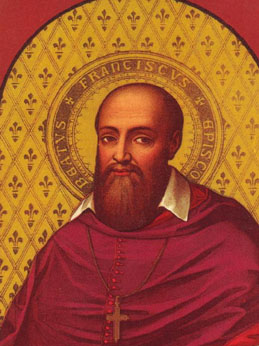
I ran across a quote from St. Francis de Sales yesterday that struck me as a profound statement of a basic truth.

Every moment comes to us pregnant with a command from God, 
only to pass on and plunge into eternity, 
there to remain forever what we have made it.


It is easy to get caught up in the great tumult that surrounds a Presidential election, but the truth is that for all the sturm und drang life's great river will roll down to the sea in its own time, no matter who is elected.  My election prediction is that after November 6, 2012, human kindness will still be in much demand and human folly in copious supply.

I recommend taking a "long" position in kindness and "shorting" folly.  It's a high percentage play.  See the link for more on the financial lingo. 

This is not to denigrate the gravity of making a choice about who will be our President.  In our Republic, we generally get exactly the politicians we want and deserve, which seems a horrible thing to say, but is entirely true.  Politicians tend to be a very accurate reflection of our own weakness and folly, as well as our strengths.

Here's a quote from Jesus of Nazareth about how we might make better use of the moments that are plunging into eternity, there to remain forever what we have made them. 

Think of these words as Jesus' "platform," except that He is not running for office and He really means what He says.  His words are true and filled with inexorable power.  Pretty heady stuff.

Blessed are the poor in spirit,
     for theirs is the kingdom of heaven.

Blessed are they who mourn,
     for they will be comforted.

Blessed are the meek,
     for they will inherit the land.

Blessed are they who hunger 
and thirst for righteousness,
     for they will be satisfied.

Blessed are the merciful,
     for they will be shown mercy.

Blessed are the clean of heart,
     for they will see God.

Blessed are the peacemakers,
     for they will be called children of God.

Blessed are they who are persecuted 
for the sake of righteousness,
     for theirs is the kingdom of heaven.

Blessed are you when they insult you and persecute you
and utter every kind of evil against you because of me.
     Rejoice and be glad, for your reward will be great in heaven.
     Thus they persecuted the prophets who were before you.


Saturday, October 20, 2012

LIBYA

On September 11, 2012, Islamic terrorists attacked the American Embassy in Libya and killed our ambassador.  


Immediately after the attack, and until September 20, 2012, the Administration blamed an obnoxious internet video about Mohammed for the assassination, on the theory that a crowd, angry over the video, got out of control and burned the Embassy. 


This original assessment proved to be totally wrong. 

It turns out that leading up to the attack, our Ambassador and the security people at the Libyan Embassy were pleading for beefed up security.  The State Department officials in Washington denied the requests and were reducing security.  The State Department was pursuing a policy of "normalization" in Libya, despite the protests of the people at the Embassy that the situation was not "normal," but still out of control and quite dangerous.

At a minimum, the assessments of both the State Department, in the run-up, and the White House, in the aftermath, were critically deficient.  

In the immediate aftermath of the murder, it would have behooved the Administration to simply state that they were investigating competing versions of events.

I suspect that no one at the CIA was terribly interested in saying, bluntly, "right now we don't really know what happened or why, and we don't have a lot of high quality intelligence resources in Libya, so an answer is going to have to wait."

I suspect that the White House was not interested in saying this, either. 

I also suspect that the "video" explanation, however hedged with reservations in initial CIA reports, was manna from heaven for both CIA higher-ups and the White House, because the alternative - that a terrorist attack occurred on 9-11, and we did not see it coming - was too painful to contemplate.  One wishes the Administration would have been as dubious about the "video" story as it was about the merit of the Ambassador's plea for security.

That there were warning signs is now obvious, just as it was in the aftermath of 9-11 itself.  The pleas for additional security were ignored or overlooked by people in a position to prevent the disaster, that is, State Department officials in Washington.  They ignored these requests because their assessment was that it was good policy to "normalize" the Embassy's situation in Libya, even though our Ambassador there was saying that the place was not "normal," it was still crazy and dangerous. 

The State Department pulled out a significant military presence and sought to treat the Libyan Embassy like one would treat an Embassy in a peaceful and relatively well ordered society.  The goal of this plan was to avoid suggesting to the new Libyan government that we did not trust them to keep our Embassy secure, which might have given offense.

The killing of the Ambassador on 9-11 demonstrates that the Administration's assessment of the situation in Libya was very wrong.  The Administration's initial reaction to the Ambassador's murder makes the case even more powerfully.  The Administration's assessment of the situation was so poor that even after the Ambassador had been murdered on 9-11- a circumstance that would suggest a terrorist attack to a dull 8th grader - the Administration insisted on believing and reporting a "non-terrorist" version of events that turned out to be false.

This particular folly is not unusual for the Obama Administration.  After the failed bombing of an airliner on Christmas Day, 2009, and an attempted car-bombing in Times Square in 2010, the Obama Administration in each instance initially said there was no indication of wider terrorist involvement.  It later became clear that the Christmas Day bomber was linked to al-Qaida and the Times Square bomber was trained by the Pakistani Taliban.  See here for more information.

This Administration has repeatedly seized on "non-terrorist" explanations for what turned out to be terrorist attacks, and pushed this narrative without waiting for the facts to develop. This does not inspire confidence.  Perhaps we could adopt a new paradigm, in which we presume that when a group of Muslims kill an American official on 9-11 it is a terrorist attack, until proven otherwise.  That is not unfair stereotyping.  It is prudence.

In this instance it took the Administration 9 days to acknowledge the reality of a terrorist attack, strong evidence of which was available the day after the attack.  Secretary of State Clinton attributes the lag to "the fog of war." 


Odd, since the Administration was so intent on explaining this event as a civil riot, rather than an act of war.  In fact, the "fog" was the Administration's ideological "fog."  It proved quite difficult to penetrate, but eventually, facts won out.  They are stubborn things.

In this case the facts compose a very sad reality.  It is the reality of an Administration's intelligence and policy failures, of an Administration so convinced of its superior wisdom, information and policy choices that it ignores facts.  It is the reality of Washington's arrogance, disregarding information from the people in the real world struggling with the consequences of Washington's bad decisions. 

It is the reality of the Obama Administration.

President Obama recently said in an interview "What happens, during the course of a presidency, is that the government is a big operation and any given time something screws up.  And you make sure you find out what's broken and you fix it."


I think we've identified what is broken.  I think we've identified what's screwed up.  We should fix it on election day.


Sunday, October 7, 2012

MIDDLE FINGER

Standing in the rain outside an abortion clinic this afternoon with my two youngest children, praying.  People drove by, reading the signs we held that said "Abortion Hurts Women" and "Abortion Mata Ninos" (Abortion kills children). 


We were praying for our country, for the lives of children ended by abortion, for the mothers who had killed their children, for those in the clinic behind us who committed abortions, for those whose lives are haunted by abortion, for the lives of those who may yet choose not to kill their children.

Mostly people drove by, glancing up at us and then looking ahead.  Sometimes people would honk their horns and wave.  Sometimes they raised their "thumbs-up," for encouragement. 

Sometimes they would blare the horn and lean out the window, thrusting their middle fingers in the air.  One car full rolled down their windows, drove slowly by, and yelled "kill them all!" 

As we prayed I could not help thinking how appropriate it was that people so opposed to life and so in favor of killing children would curse us by saying "f*** you!"  The middle finger thrust at another human being is to wish upon them that they be forcibly raped.  It is an explicit perversion of sex, turning it from the most profound act of love into an evil expression of the dominance of a powerful person over a weaker one.

So like abortion.

Lord forgive them, they know not what they do.